


Relevant platforms to support internationalisation
An entrepreneur should be able to select the main sources of data to help him/her make decisions in the area of internationalisation.
How to identify and utilize platforms to support internationalisation
To identify and use platforms to support the internationalisation process, follow these steps:
- Define Your Objectives: Clearly outline your internationalization goals and what specific data you need. Are you looking for market size information? Consumer behavior insights? Or competitor analysis?
- Platform Selection: Choose the most suitable market research platform based on your objectives. Consider factors such as the regions covered, the comprehensiveness of the data, and your budget.
- Data Extraction: Once you’ve selected a platform, learn how to navigate it effectively. Extract data on market trends, consumer preferences, and competitor landscapes.
- Data Interpretation: Interpret the data you’ve gathered. Look for patterns, trends, and opportunities. How can this information inform your internationalization strategy?
- Strategy Formulation: Based on your data-driven insights, formulate strategies for international expansion. Decide on the target market, product adaptations, and marketing approaches.
Some examples of platforms to support internationalisation
Market research platforms provide valuable insights into consumer behavior, market trends, and competitiviness. Below are the main international databases where you can obtain official data and statistics on the internationalisation of companies, whether large or small, in various sectors of activity. Some examples include:
UN-Comtrade: The UN Comtrade Database is the world’s most comprehensive global trade data platform. The United Nations Comtrade database aggregates detailed global annual and monthly trade statistics by product and trading partner for use by governments, academia, research institutes, and enterprises. Data compiled by the United Nations Statistics Division covers approximately 200 countries and represents more than 99% of the world’s merchandise trade. Information can be extracted in a variety of formats, including API developer tools for integration into enterprise applications and workflows. Subscribers receive access to additional functionality to improve efficiency and specificity (UN-Comtrade, 2023). Website: https://comtradeplus.un.org/
Figure 1 – UN Comtrade database website
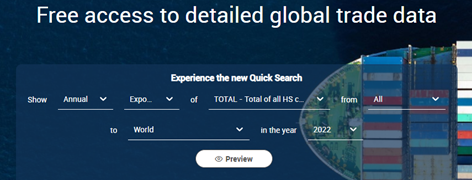
Source: https://comtradeplus.un.org/ (10 November 2023)
Trade Map: Trade Map provides – in the form of tables, graphs and maps – indicators on export performance, international demand, alternative markets and competitive markets, as well as a directory of importing and exporting companies. Trade Map covers 220 countries and territories and 5300 products of the Harmonized System. The monthly, quarterly and yearly trade flows are available from the most aggregated level to the tariff line level. Website: https://www.trademap.org/
Figure 2 – Trade Map website
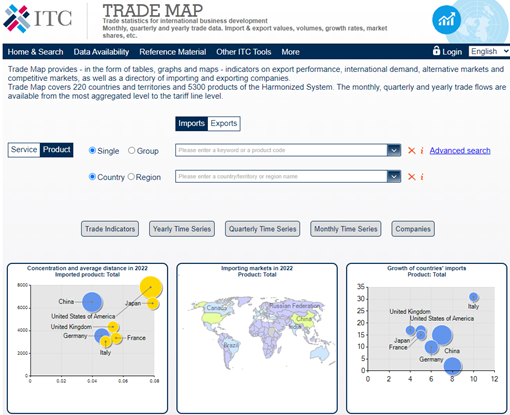
Source: https://www.trademap.org/Index.aspx (16 October 2023)
Statista: Statista offers a wide range of statistical data, market research, and consumer survey results, making it useful for understanding market trends and consumer preferences in the global furniture industry. Website: https://www.statista.com/
Figure 3 – Statista website
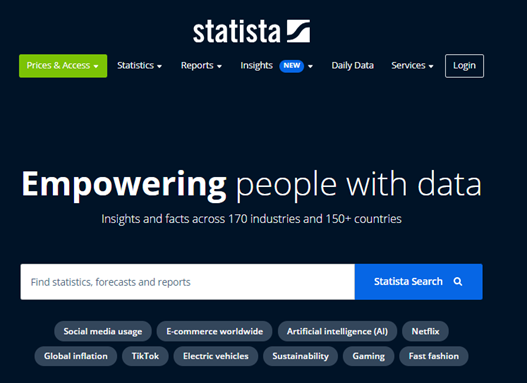
Source: https://www.statista.com/ (16 October 2023)
Euromonitor International: This platform provides market research reports on various industries, including furniture. It offers data on market sizes, growth rates, and competitive analysis at a global level. Website: https://www.euromonitor.com/
IBISWorld: IBISWorld is known for its comprehensive industry reports, including the furniture manufacturing industry. It includes information on market trends, competitive dynamics, and future forecasts. Website: https://www.ibisworld.com/
References
Trade Map (2023). https://www.trademap.org/Index.aspx (accessed 16 October 2023).
UN-Comtrade (2023). UN Comtrade Database. https://comtradeplus.un.org/ (accessed 10 November 2023)